568
8 min
Simply About Simplification: 7 Hints not to Ignore When Moving to SAP S/4HANA

Ksenia Razumovskaya
Business Development Manager, TeamIdea Group
Your colleagues and associates from TeamIdea have prepared some simple tips for you.
Don't forget to do this, take the right steps and always keep in mind these simple practical things that will help you migrate to new SAP cloud solutions with minimal costs.
1. Not everything from ECC will survive the move
Migrating to SAP S/4HANA is not a systematic system upgrade. It is a transition to a new data model and new technical principles. SAP S/4HANA is not ECC with better performance. In S/4HANA: many old transactions are removed; obsolete functions are no longer supported; some familiar technical components no longer exist.
To put it simply: Many legacy ECC transactions are removed in SAP S/4HANA because their underlying logic relies on outdated data structures and archaic tables. In most cases, SAP replaces them with simplified processes or Fiori-based applications that work directly on the new data model.
Practical advice: Before starting the project, create an inventory of custom developments, frequently used transactions, and legacy integrations.
2. Custom code is the main risk area
One of the core topics in the SAP S/4HANA Simplification List is custom ABAP compatibility.
It matters because:
- database tables have changed or disappeared;
- many tables are replaced by CDS views;
- direct database access is restricted.
To put it simply: In many ECC systems, custom code compensates for missing standard functionality. In S/4HANA, part of this code becomes dismissed or incompatible due to changes in the data model.
Practical advice: Custom code must be checked with S/4HANA readiness tools and cleaned from obsolete logic
3. The data model is simpler — and stricter
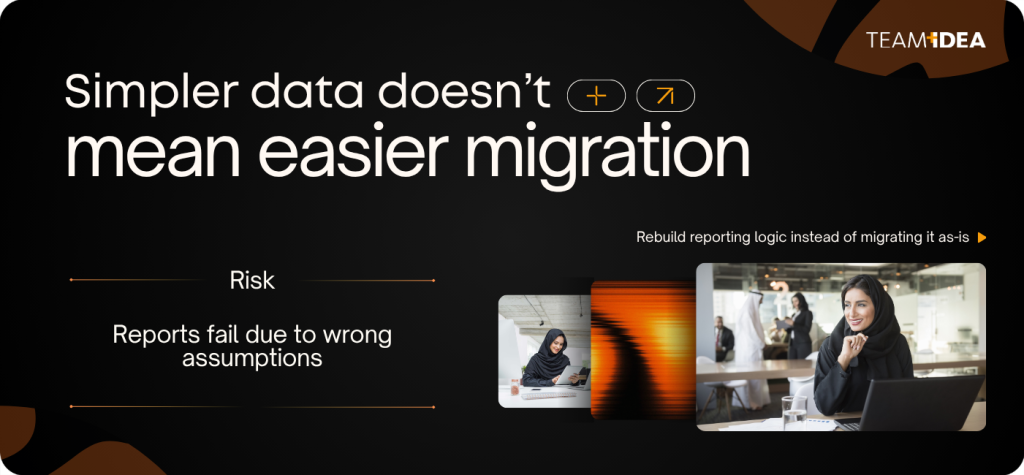
SAP S/4HANA removes data duplication. The most well-known example is the Universal Journal, which consolidates financial data into a single structure. Benefits include faster reporting and fewer reconciliation issues. However, old reports may stop working.
To put it simple: Many reporting issues during migration are caused by outdated assumptions about table structures rather than technical errors.
Practical advice: Do not migrate reports “as is”. Review reporting logic and use CDS-based analytics
4. Business Partner is mandatory
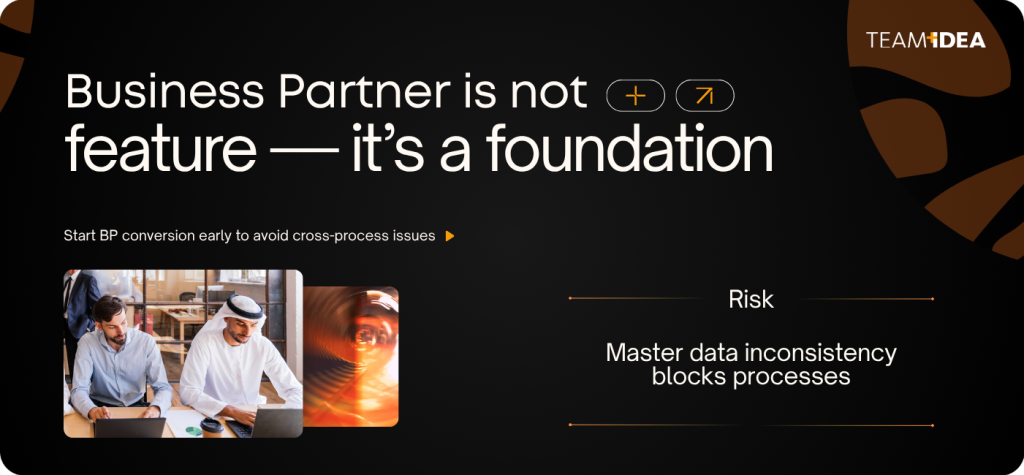
In SAP S/4HANA, customers and vendors exist only as Business Partners.
To put it simply: Business Partner is not just a technical object. It affects finance, logistics, and master data governance across the system.
Practical advice: Plan Business Partner conversion early and clean master data in advance
5. Not all data is migrated automatically
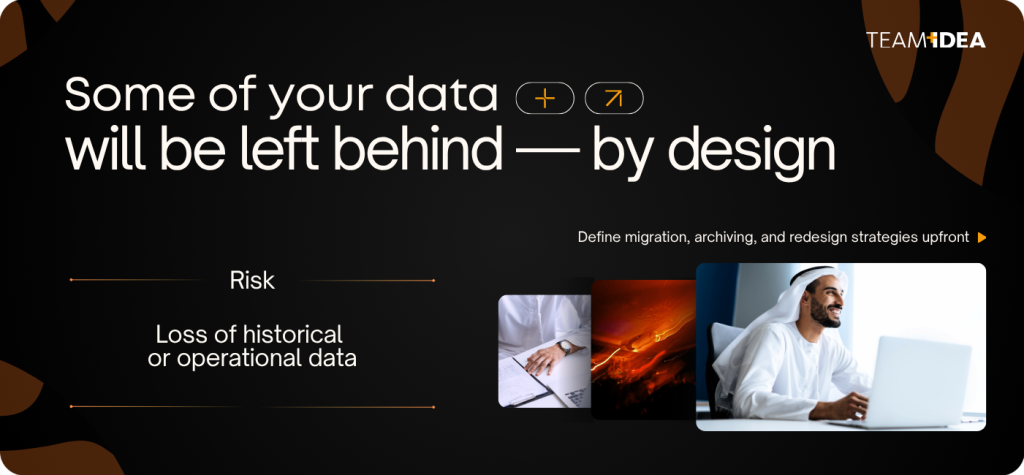
Some data and configurations are not migrated or are only partially supported in S/4HANA.
To put it simply: Some data objects are not migrated to S/4HANA not due to technical errors, but because SAP intentionally excludes obsolete or inconsistent data models. Migration is designed to support clean, simplified structures rather than preserve historical complexity.
Practical advice: Decide early which data should be migrated, archived, or redesigned.
6. S/4HANA is a reason to rethink processes
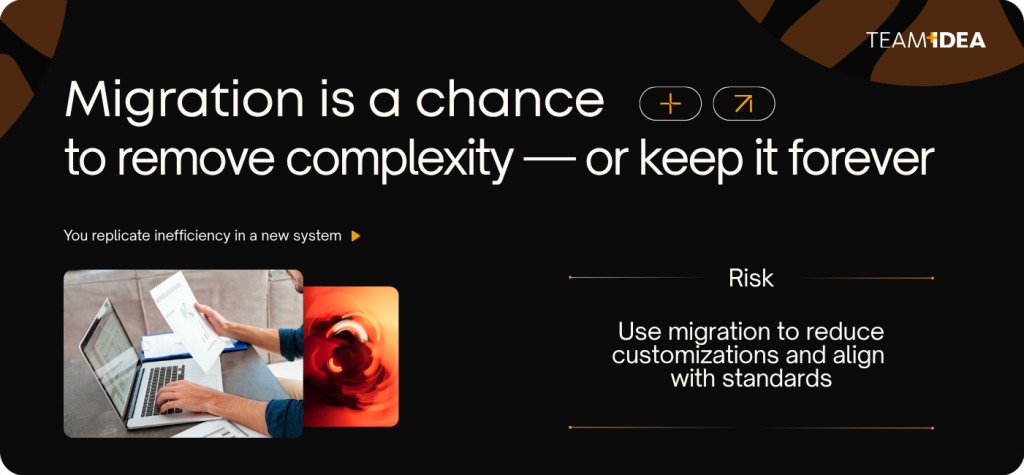
Many processes in S/4HANA are simplified or redesigned, especially in finance, logistics, and analytics.
To put it simple: SAP S/4HANA migration is positioned as a business transformation project, not a technical system copy. Projects that focus only on technical conversion often miss the benefits of simplified processes, reduced reconciliation, and real-time analytics.
Practical advice: Use migration as a chance to reduce customizations and adopt standard processes.
7. Technical go-live is not business success
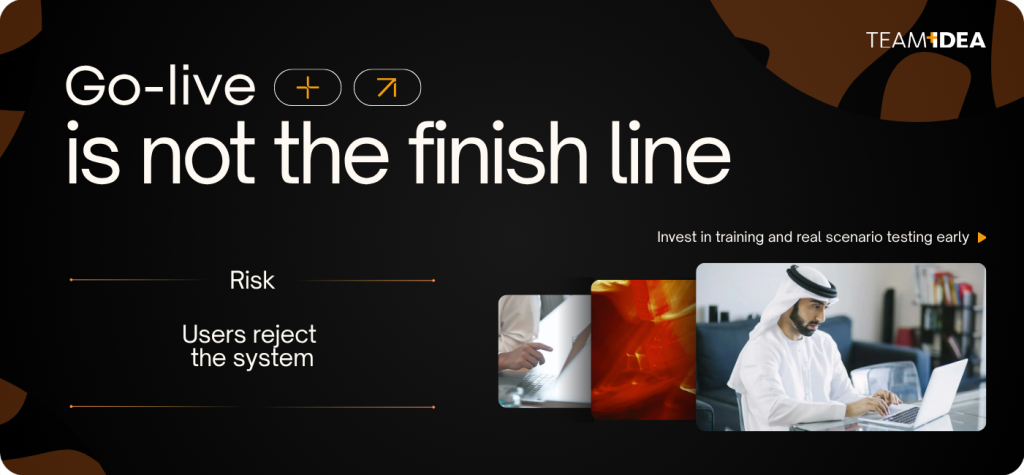
A system can be live while users struggle with new interfaces and logic.
To put it simple: A technically successful SAP S/4HANA go-live does not guarantee business success. Changes in transactions, user interfaces, and process logic often require early user training and scenario-based testing to ensure smooth adoption.
Practical advice: Train users early and test real business scenarios, not only technical checks.
Curious to know more?

Here is how to find extra details and technical explanations: please, take a look at the Simplification List for SAP S/4HANA 2023 initial shipment, Feature Pack Stack 1-3 and SAP S/4HANA Cloud Private Edition 2023 initial shipment, Feature Pack Stack 1-3.